
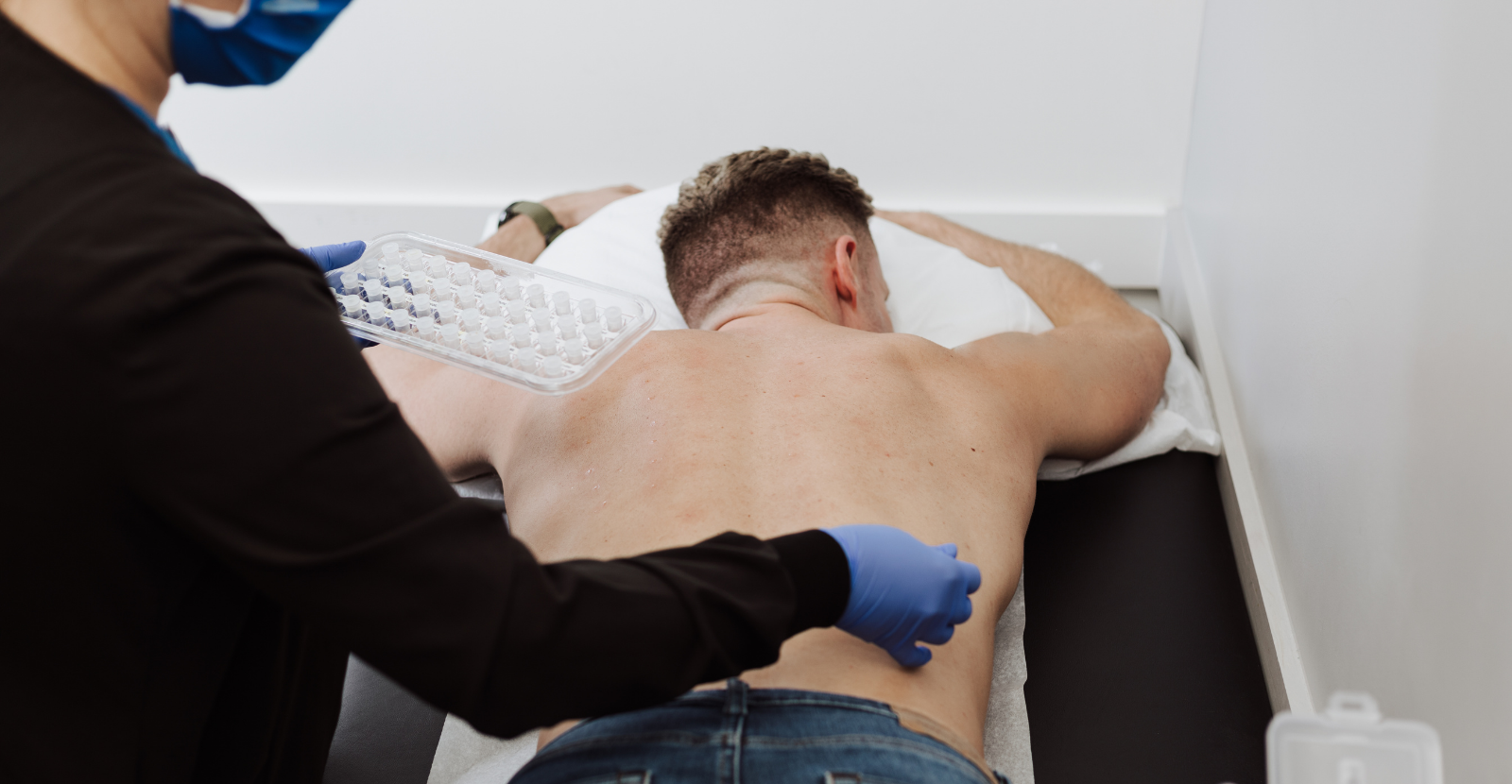
Allergy Skin Testing
During allergy skin testing, your skin is exposed to suspected allergy-causing substances (allergens) and is then observed for signs of an allergic reaction.
Along with your medical history, allergy tests may be able to confirm whether a particular substance you touch, breathe, or eat is causing symptoms.
Why it's done
Information from allergy tests may help your doctor develop an allergy treatment plan that includes allergen avoidance, medications, or allergy shots (immunotherapy).
Allergy skin tests are widely used to help diagnose allergic conditions, including:
Hay fever (allergic rhinitis)
Allergic asthma
Dermatitis (eczema)
Food allergies
Penicillin allergy
Insect venom allergy
Skin tests are generally safe for adults and children of all ages, including infants. In certain circumstances, though, skin tests aren't recommended. Your doctor may advise against skin testing if you:
Have ever had a severe allergic reaction. You may be so sensitive to certain substances that even the tiny amounts used in skin tests could trigger a life-threatening reaction (anaphylaxis).
Take medications that could interfere with test results. These include antihistamines, many antidepressants, and some heartburn medications. Your doctor may determine that it's better for you to continue taking these medications than to temporarily discontinue them in preparation for a skin test.
Have certain skin conditions. If severe eczema or psoriasis affects large areas of skin on your arms and back — the usual testing sites — there may not be enough clear, uninvolved skin to do an effective test. Other skin conditions, such as dermatographism, can cause unreliable test results.
Blood tests (in vitro immunoglobulin E antibody tests) can be useful for those who shouldn't or can't undergo skin tests. Blood tests aren't used for penicillin allergy.
In general, allergy skin tests are reliable for diagnosing allergies to airborne substances, such as pollen, pet dander, and dust mites. Skin testing may help diagnose food allergies. But because food allergies can be complex, you may need additional tests or procedures.
Preparing for an Allergy Skin Test
Before your allergy test, your doctor will ask you about your lifestyle, family history, and more.
You will be asked to stop taking the following medications before your allergy test because they can affect the test results:
prescription and over-the-counter antihistamines
certain heartburn treatment medications, such as famotidine (Pepcid)
anti-IgE monoclonal antibody asthma treatment, omalizumab (Xolair)
tricyclic antidepressants, such as amitriptyline (Elavil)
What you can expect
Skin testing is usually done at a doctor's office. A nurse generally administers the test, and a doctor interprets the results. Typically, this test takes about 20 to 40 minutes. Some tests detect immediate allergic reactions, which develop within minutes of exposure to an allergen. Other tests detect delayed allergic reactions, which develop over a period of several days.
Results
Before you leave your doctor's office, you'll know the results of a skin prick test or an intradermal test. A patch test may take several days or more to produce results.
A positive skin test means that you may be allergic to a particular substance. Bigger wheels usually indicate a greater degree of sensitivity. A negative skin test means that you probably aren't allergic to a particular allergen.
Keep in mind that skin tests and blood allergy tests aren't always accurate. They sometimes indicate an allergy when there isn't one (false-positive), or skin testing may not trigger a reaction when you're exposed to something that you are allergic to (false-negative). You may react differently to the same test performed on different occasions. Or you may react positively to a substance during a test but not react to it in everyday life.
Your allergy treatment plan may include medications, immunotherapy, changes to your work or home environment, or dietary changes. Ask your doctor to explain anything about your diagnosis or treatment that you don't understand. With test results that identify your allergens and a treatment plan to help you take control, you'll be able to reduce or eliminate allergy signs and symptoms.